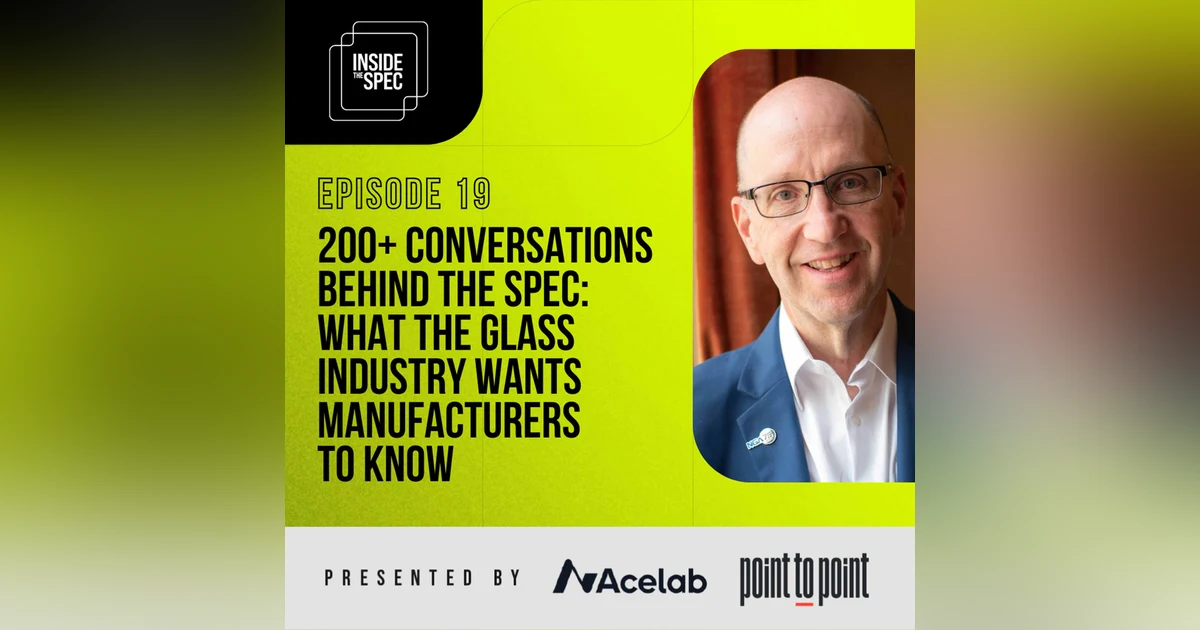
Episode 19: 200+ Conversations Behind the Spec: What the Glass Industry Wants Manufacturers to Know


Summary
Glass and glazing veteran Max Perilstein joins Megan Kacvinsky and Vardhan Mehta to unpack what manufacturers often miss after the sales pitch: quality, technical support, training, and trust. Drawing on decades in the industry and more than 200 podcast interviews, Max shares how manufacturers can strengthen customer relationships, close technical gaps, and build stronger organizations.
Key Insights
- Quality and technical support are inseparable from brand reputation. Strong marketing cannot compensate for products that fail in the field or teams that cannot support customers when problems arise.
- The role of the salesperson is changing. Customers increasingly need salespeople with enough technical knowledge to help with estimating, initial jobsite assessment, problem-solving, and communication back to the plant or technical team.
- The voice of the customer should reach beyond sales and leadership. Plant managers, warehouse teams, and production staff benefit from hearing directly how small quality issues affect schedules, cost, and trust on the jobsite.
- Training cannot be treated as a one-time assumption. Even experienced employees may have learned outdated or incorrect methods, making ongoing education, industry involvement, and formal training essential.
- The glass and glazing industry faces a significant technical talent gap. With an aging workforce, manufacturers and contractors need to attract younger engineers, architects, and other technically minded professionals while creating pathways for knowledge transfer.
- Standards only improve quality when people understand and apply them. Max points to ASTM, NGA/GANA, and FGIA standards, while noting that many companies either do not read them, do not fully understand them, or are not reached by industry education efforts.
- Certification can reduce risk and improve installation quality. Programs such as NACC and the Architectural Glass and Metal Technician certification can help raise expectations for installers and give project teams greater confidence.
- Before making major organizational changes, leaders should listen first. Max recommends beginning with customer conversations, employee input, training audits, safety, culture, delivery performance, and defect data before deciding what to change.
Practical Takeaways for Manufacturers
- Conduct a customer listening tour with major accounts and ask for candid feedback on product quality, delivery, technical service, and field performance.
- Bring operations and production employees into customer conversations so they understand the downstream impact of tolerances, defects, and delays.
- Audit sales and technical teams for real product knowledge. Identify where salespeople can handle first-line technical questions and where escalation is still required.
- Build a structured training program rather than relying on tenure or tribal knowledge. Use trade associations, technical meetings, certification programs, and internal training centers where appropriate.
- Review quality-control investments and compare current inspection practices against the standards and technologies available in the market.
- Create a talent strategy that reaches engineering, architecture, and other technical graduates who may not yet know the opportunities available in building products and glazing.
- Measure operational fundamentals such as on-time delivery, defect rates, safety performance, employee development, and customer satisfaction before launching major brand or growth initiatives.
- Make sure marketing promises match what the organization can consistently deliver. Trust is built through repeated product and service performance, not messaging alone.
About the Guest
Max Perilstein is the founder of Sole Source Consultants and host of the From the Fabricator blog and podcast. His family history in glass dates back to 1898, and after beginning his career in sports broadcasting, he joined the family glass business and built a career across the glass and glazing industry. Max launched Sole Source Consultants in 2011 and has interviewed more than 200 industry guests through his podcast, giving him a broad view of the challenges, opportunities, and people shaping the market.
Quotable Moments
- “The salesperson that stops by with donuts is now really out. They want a salesperson who has technical chops.”
- “Brand perception and sentiment is not built through a headline on your website. It is built through the interaction that people have with your product.”
- “Before you do any changes, you have to hear it all, you have to see it all. You gotta listen first and then act later.”
Next Steps for Manufacturers
Use this episode as a prompt to audit the gap between what your brand promises and what customers actually experience. Start by listening to customers, assessing technical and training needs, and reviewing quality and delivery performance. From there, manufacturers can prioritize investments that strengthen trust, improve field support, develop talent, and create a more credible foundation for growth.